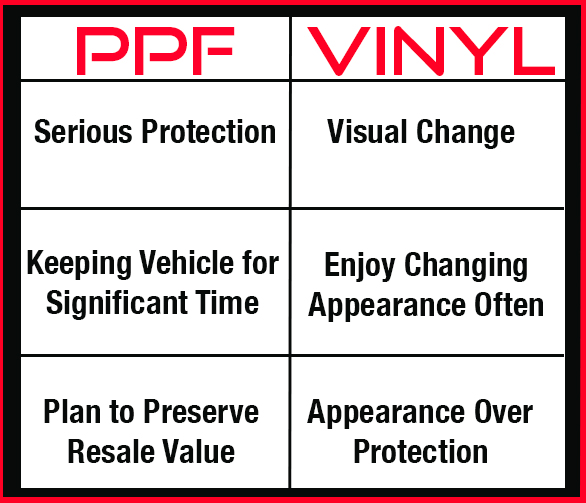
Whether you’re safeguarding your dream car’s finish or giving it a fresh new look, choosing between Paint Protection Film (PPF) and a Vinyl Wrap is a major decision. Both have their place, but they serve very different purposes. Understanding the materials, history, benefits, and trade offs will help you make the right call.
Origins & Evolution
Paint Protection Film: From Military Use to Showroom
PPF has its roots in military applications, where protecting sensitive equipment from abrasions and environmental damage was critical. Early versions were “anti abrasion films” used on helicopter blades, weapons components, and aircraft surfaces.
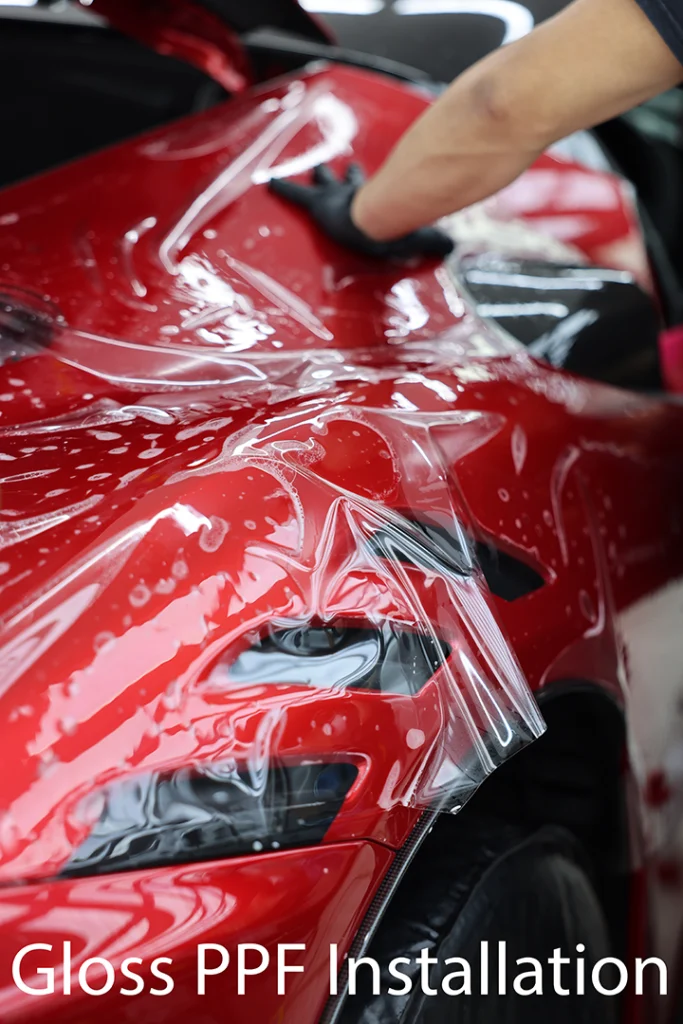
Over time, automotive manufacturers realised that consumers also needed paint protection, especially for high end vehicles where rock chips and road debris could be extraordinarily expensive to repair. This led to the first automotive PPF products.
✔ Self-Healing Technology: Modern TPU films can “heal” minor scratches when exposed to heat or sunlight.
✔ Improved Clarity: Early films could yellow over time where as newer formulas resist UV degradation.
✔ Better Adhesives: Modern adhesives hold strong without damaging clearcoats.
✔ Hydrophobic / Ceramic Coatings: Enhanced top layers repel water and dirt.
How PPF Has Improved
In short, PPF has become significantly more durable, clearer, and smarter over time.
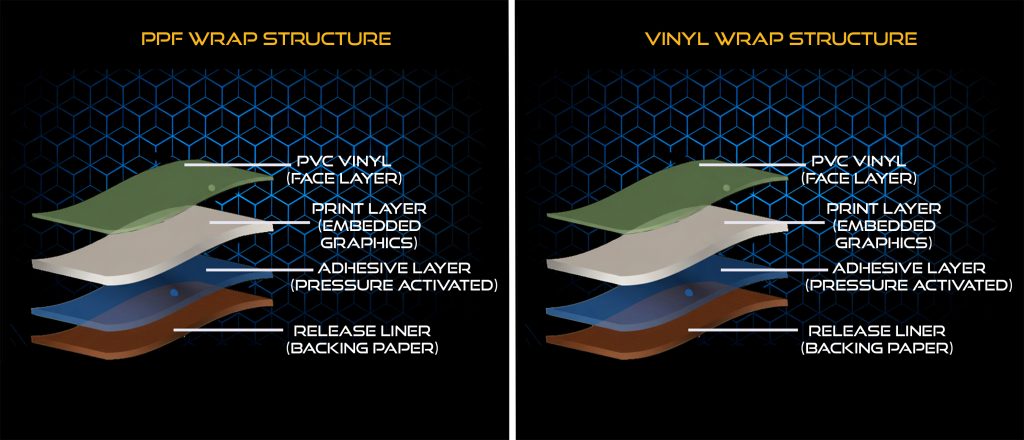
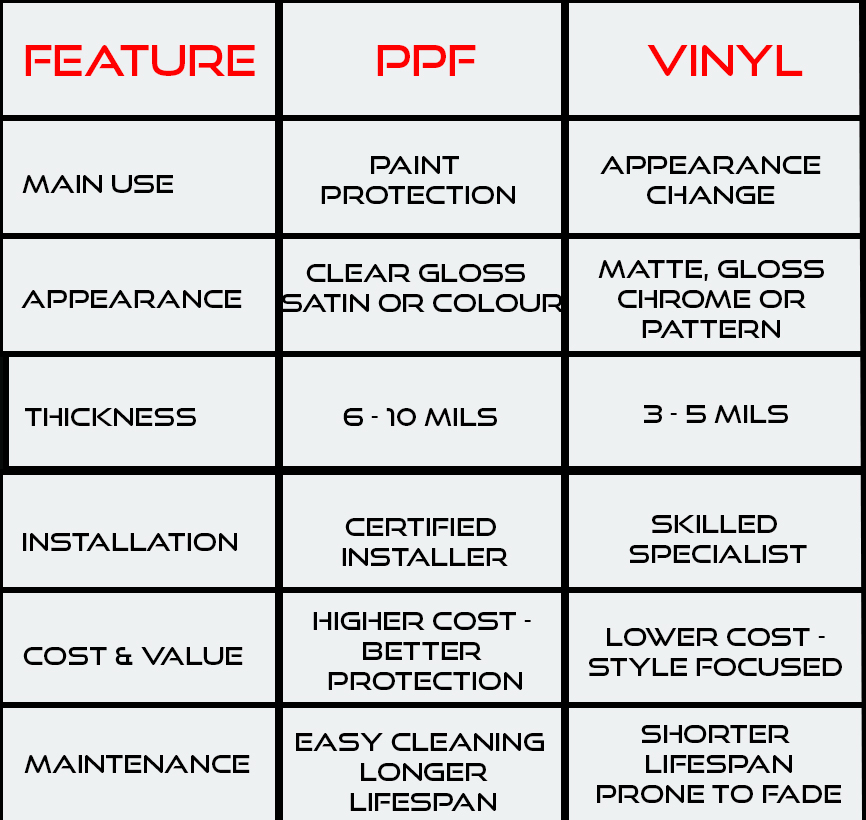
Material Differences
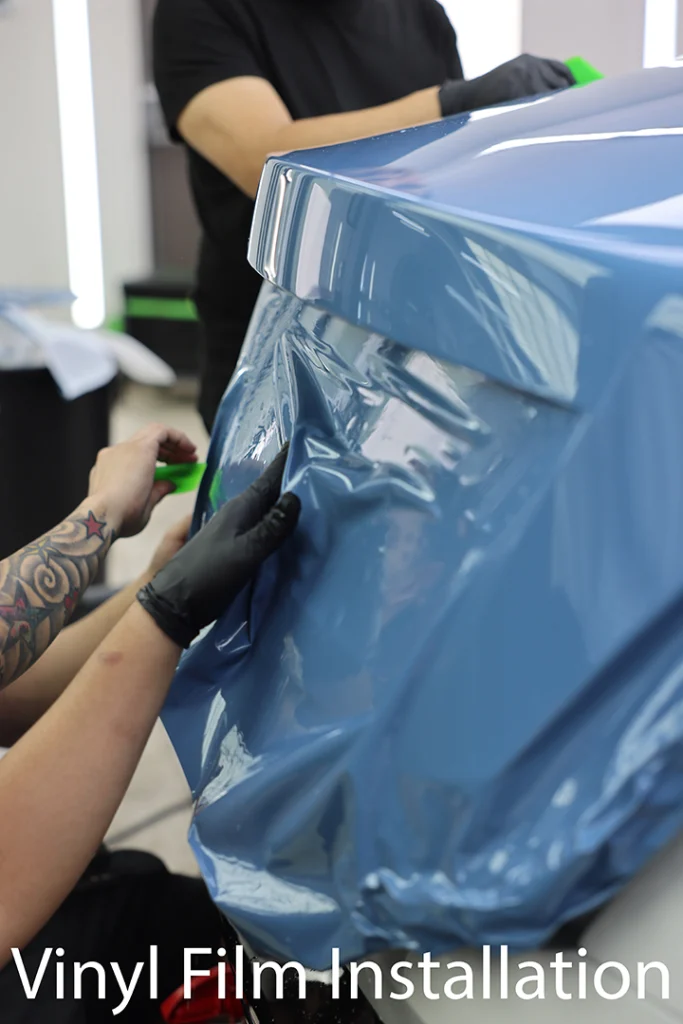
Vinyl Wrap: A Graphic Design Evolution
Vinyl wraps started in the signage industry with large PVC sheets used for billboards and commercial signage in the mid 20th century. As printing technology advanced, vinyl became a canvas for detailed graphics.
Car enthusiasts began experimenting with vinyl for stylistic wraps in the 1990s and early 2000s, and the industry exploded from there.
How Vinyl Wrap Has Improved
✔ Better Adhesives: Repositionable adhesives that reduce bubbles and allow improved fits.
✔ Expanded Finishes: from gloss to matte, satin, chrome, carbon fiber and custom prints.
✔ Variable Thickness & Durability: Thicker vinyl and UV coating help resist fading.
✔ Digital Printing Compatibility: Full colour, high resolution graphics are now common.
In sort: Vinyl has evolved far more on the aesthetic side than in protective performance.
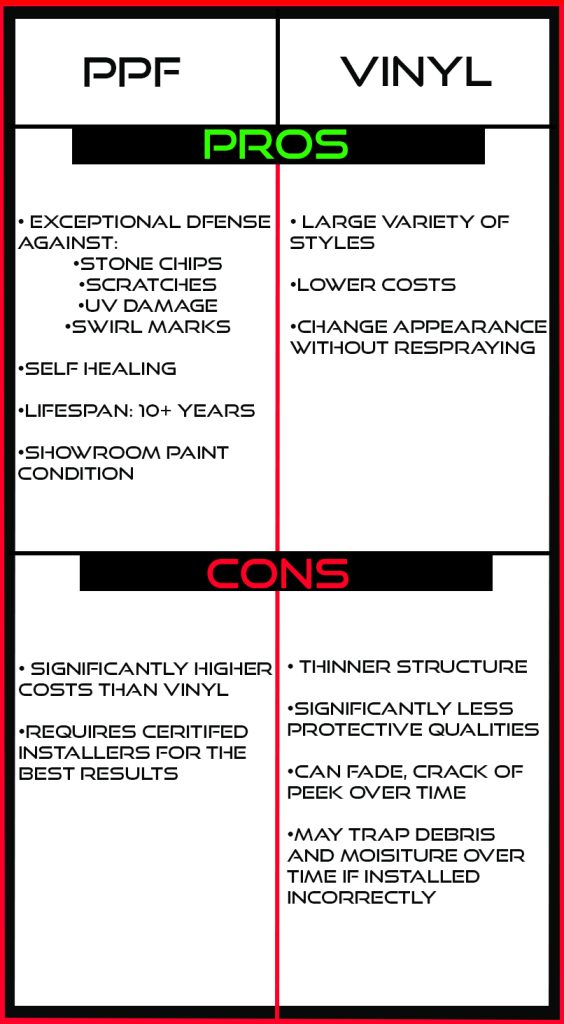
Pros v Cons
Which Should You Choose?